
Oil for water and wastewater treatment industry
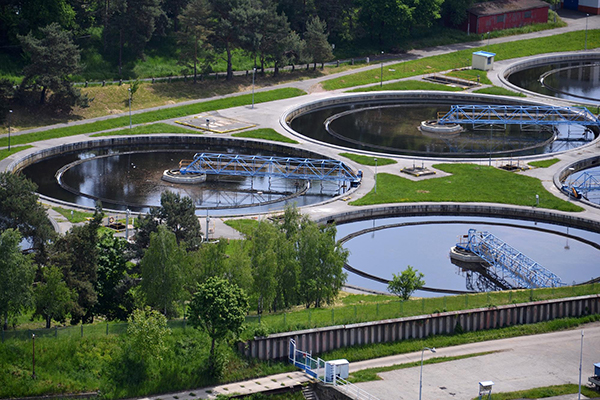
The importance of the water industry is not hidden from anyone. Water consumption in both industrial and urban drinking water sectors has always been considered. But in industries, keep in mind the undeniable importance of water for the advancement and flawless functioning of industries. Many industries depend on the water and wastewater industry:
Air conditioning
Production of products (such as clothing and food)
Rinse in industries such as soft drinks and …
Transportation of raw materials (in iron smelting and sugar cane factories)
Also, considering the variable amount of water consumption in various industries, depending on the technology of that industry and …, the main uses can be categorized as follows:
Heat transfer in industry
Mechanical matters
Production and product systems
Energy generation through steam
And …
But this same water consumption, in addition to the benefits, in certain cases such as when an emulsion is formed, may also have disadvantages such as pollution from suspended and undissolved particles.This water output from industrial processes undergoes changes that can be physical, chemical or biological. Mixing water with oil and grease, suspending various particles in water, dissolving the gas phase in water or dust, etc.
In many cases, managers of water-consuming factories are determined to reduce this consumption, which will result in greater water savings for the agricultural sector, lower costs of treatment plants and chemicals used, reducing the volume of wastewater produced, etc. Recirculating water is one of the issues that experts in this field have been considering for years to save water consumption.
Urban drinking water is purified through stages that include mixing water with chlorine for the purpose of disinfection and algae growth will be controllable.In the second stage, air is introduced into the liquid to remove polluting gases from the system and increase the oxygen level in the water. In the third stage, this water remains stagnant until most of the pollutants settle. This remaining wastewater is ultimately sent to another location for agricultural use. Now, to complete the effectiveness of this settling process, it must pass through fine-pored meshes and disinfectants are added to it. In stage 4, coagulation forms the core of the activity. Now, using products such as coagulant aids, the remaining fine particles are made heavier and separated from the water. Finally, filtering the water is very important. Filters such as sand filters separate fine particles. It is explained that it cannot always be stated that water purification is carried out in the same order and number of steps.Water purification involves performing numerous physical and chemical steps that ultimately prepare water for drinking or industrial use. Therefore, the goal is to improve the physical, chemical, and microbial parameters in water to the levels specified in the consumption standards. Depending on the characteristics of the natural water source and the ultimate goal of purification, several methods are used. Many of these methods, including water disinfection, coagulation and flocculation, liming, etc., use chemicals. Some of these chemicals are substances with simple and specific chemical formulas, while others are formulated substances with special and enhanced capabilities.
Water is also used in industrial applications as a cooling medium and as a steam material for heating.In these processes, several problems occur, including sedimentation, corrosion, foaming, and microbial contamination, and chemicals play a very important role in controlling these problems.
Another expanding process is the desalination process. In this process, the goal is to separate dissolved salts from salt water and produce fresh water for drinking or industrial purposes. There are several methods for desalination of water, all of which also use chemicals.
As for industrial and urban water purification, various products are produced and supplied by Mehrtash Sepahan Company in 4 categories.Water treatment chemicals for cooling systems
Chemicals for desalination systems
Boiler chemicals
The first category includes water treatment chemicals for cooling systems:
Antifouling – Anticorrosion
Anticorrosion
Biocids
Dispersants – Biodispersants
Antifoam (antifoam)
Chemicals for desalination systems include the following:
Antifouling (thermal and RO desalination units)
Membrane detergent
Biocide and RO disinfectant
And the third category, which is specific to boilers:
Oxygen scavengers
Anticorrosion and antifouling
Alkalinity enhancers
Anticorrosion of condensate lines
Antifoam (antifoam)